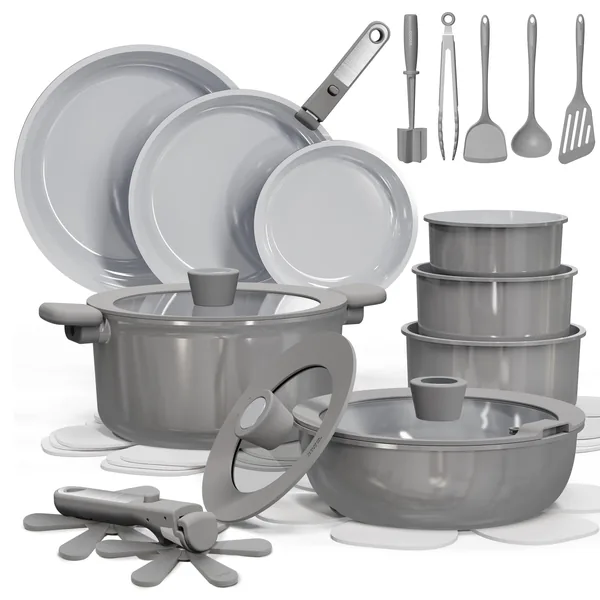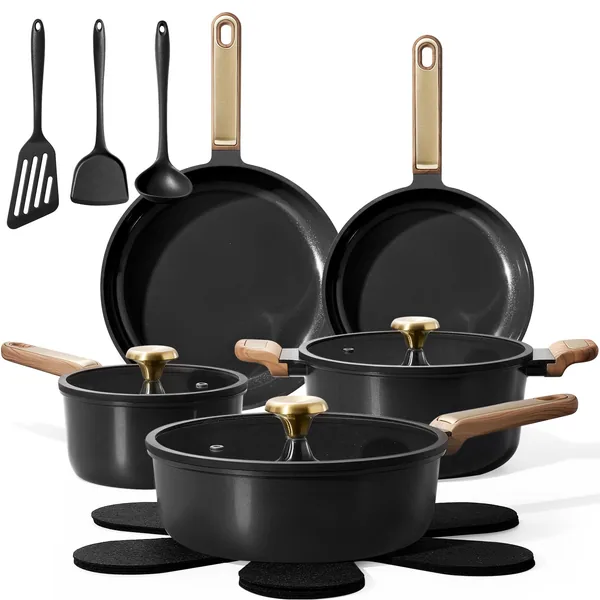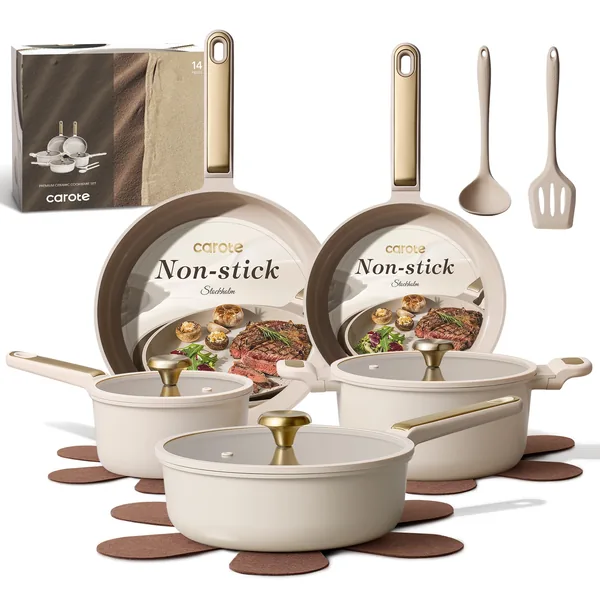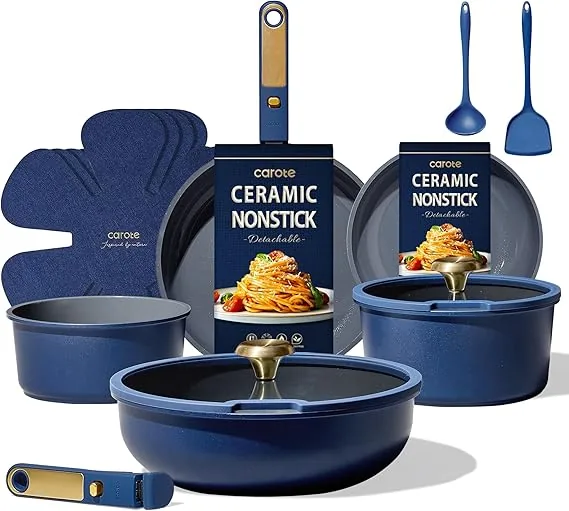
Carote Ceramic Cookware (PFAS-Free)

Ceramic is the line for buyers who want zero PTFE/PFAS exposure on the cooking surface. Carote’s ceramic sets use a sol-gel mineral coating instead of the granite/PTFE composite — with different trade-offs you should understand before you buy.

As an Amazon Associate I earn from qualifying purchases.

Carote’s ceramic line is sol-gel coated — a silica-based finish baked onto the same die-cast aluminum body the granite line uses. The marketing claim is ‘non-toxic, PFAS-free, PFOA-free’, which is accurate: there is no fluoropolymer anywhere in the cooking surface.

The honest trade-off: ceramic loses its release performance faster than granite. A new ceramic pan releases eggs like glass for the first 6-12 months; after that you need a thin film of oil for the same result. If avoiding fluoropolymers matters to your household, that’s a worthwhile trade. If you just want the longest-lasting nonstick, granite is a more durable choice.

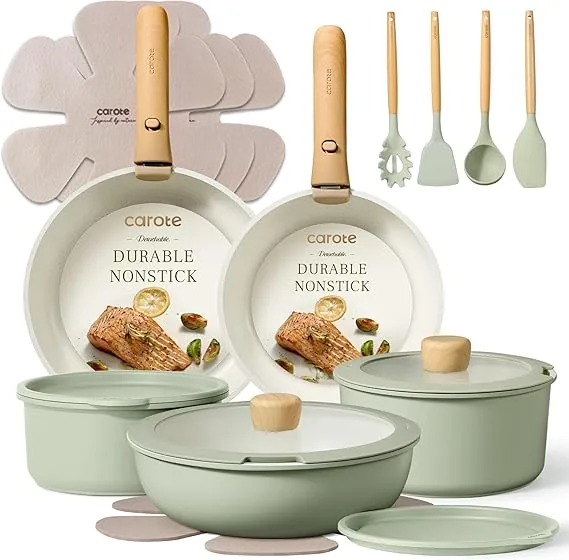
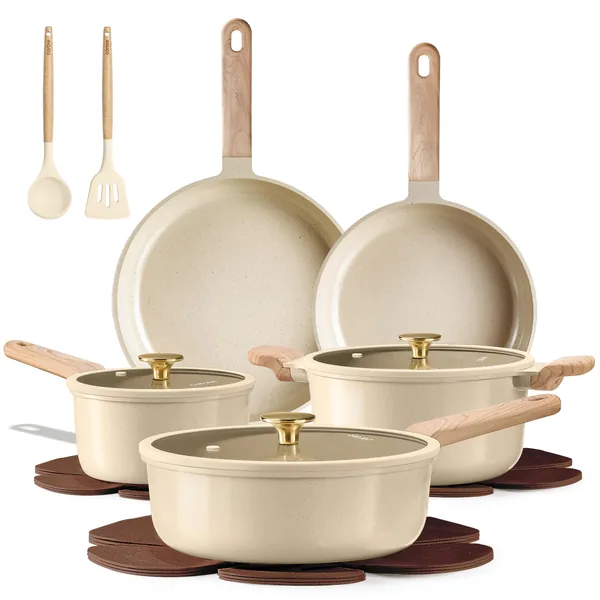
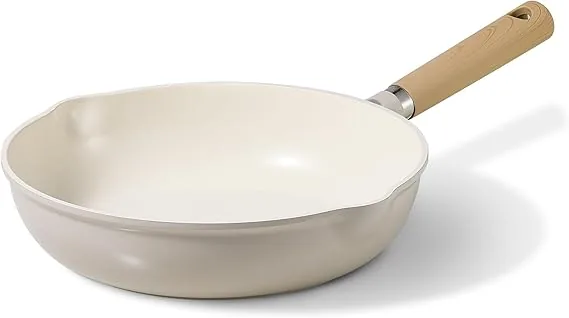
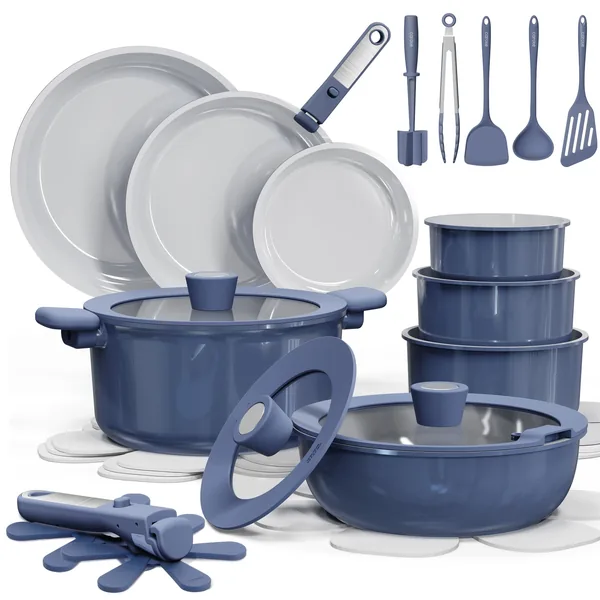
The ceramic line is also where Carote ships the most colors — black, wine red, charcoal, and a soft sage green, plus the standard white.

FAQs about Carote Ceramic Cookware (PFAS-Free)

How long does Carote ceramic stay nonstick?

Expect 6-12 months of glass-smooth release with daily use. After that you’ll need a thin film of oil for eggs and delicate proteins. The pan is still functional for years, just less effortlessly nonstick than when new.

Is Carote ceramic really PFAS-free?

Yes — the cooking surface is a sol-gel (silica-based) coating with no fluoropolymers. Always verify the specific product’s certification on the Amazon listing if this is your reason for buying.

Granite vs ceramic — which should I buy?

Ceramic for zero PFAS exposure and shorter ownership horizons (2-3 years). Granite for longer nonstick performance (3-5 years) if PTFE in trace amounts is acceptable.